








Margaret Hoover moderated a conversation with General Jim Mattis, former U.S. Secretary of Defense, and Ryan Holiday, bestselling author and modern interpreter of Stoic philosophy, on the character that sustains a republic. Drawing on experience in military command, classical philosophy, and the enduring example of America’s founding generation, including their shared admiration for George Washington, the discussion explored the virtues that have defined American leadership at its best: discipline, moral courage, humility in the exercise of power, and a profound sense of duty.
This live episode of Firing Line considered how those principles continue to define the American idea, and what they require of leaders and citizens alike in the decades ahead.
- Freedom is not an accident of history. It is the result of ideas tested over time, shaped by debate and sustained by institutions and citizens willing to defend them. The United States was founded on an audacious premise that a free people could govern themselves, that liberty could endure, not through force, but through law, not through unanimity, but through argument.
- I have a dream that one day this nation will rise up, live up the true meaning of its cream,
- And not through tradition alone, but continued renewal across generations. Americans have wrestled with enduring questions. What does citizenship require? What responsibilities accompany freedom? How should power be restrained? And how should a free society respond to moments of danger, disruption, and change? Today, those questions are once again, urgent. Democratic societies face pressure at home and abroad. New technologies are reshaping economies and institutions. Authoritarian systems challenge the principles of open societies, and Americans are called to reconsider how freedom can be preserved in a rapidly changing world. The ideas that made us dialogues on freedom is dedicated to examining these challenges through serious inquiry and open debate. Across the year, the Hoover Institution will bring leading voices to explore the foundations of American freedom from citizenship and education to innovation, governance, national security, and global competition. Each dialogue connects enduring principles to contemporary choices, asking not only where we have been, but where we're going. These conversations are not about prescribed dogma or doctrine. They're grounded in open, serious, and constructive dialogue. They are about a deeper understanding and about responsibility and about the ideas that have made the United States and will shape its future. We hold these truths to be self-evident that all men are created equal, and that they are endowed by their creator with certain unalienable rights. That among these are life, liberty, and the pursuit of happiness.
- Good afternoon and welcome to the Hoover Institution. I'm Eric Waken, the Deputy Director of the Institution and the Everett and Jane Howe, director of our library and archives, which as many of you know, is one of the greatest repositories of archival record of human freedom and anti-free in the world. We're delighted to have you here for this special taping of firing line with Margaret Hoover, which is part of the ideas that made us dialogues on freedom. Our one year series marking the an, the mark, excuse me, our one year series marking America's 250th anniversary. This series explores the ideas, the institutions, and the choices that have shaped the American experiment and those that will guide us in the years ahead. At a moment of great possibility and transformation, we invite you, our audience to consider some of the nation's most enduring questions. What does citizenship ask of us? How do free societies cultivate trust? How can freedom continue to thrive in a changing world? This afternoon's conversation speaks directly to those questions, and we're honored to welcome three remarkable voices, all three of whom in addition to being wonderful, brilliant thinkers and writers, I'm honored to say, have that connection to the Hoover Library and Archives. Margaret Hoover, host of PBS's firing line has long championed, rigorous and civil public discourse. She served in the White House under President George W. Bush at the Department of Homeland Security on Capitol Hill and on two presidential campaigns. She's also a bestselling author and president of the American Unity Fund General Jim Mattis, United States Marine Corps, retired as the Davies Family Distinguished Fellow at the Hoover Institution, and served as the 26th Secretary of Defense. Over a distinguished 43 year career in the Marine Corps, Jim commanded at every level LED forces in Afghanistan and Iraq oversaw US Central Command and served as NATO Supreme Allied Commander for transformation. He is also the author of Call Sign Chaos and Ryan Holiday, a bestselling author and one of the most widely read interpreters of the stoic philosophy today. His books include, the Obstacle is the Way, ego is the Enemy. Stillness is the key and the Daily stoic. They've introduced millions of readers to the enduring relevance of classical virtue. Together these three speakers will explore the values and virtues that sustain a republic citizenship, moral courage, humility in the exercise of power and a deep sense of duty. Thank you for joining us. Please give a warm Hoover welcome to the Esteem Group,
- General Jim Mattis. Ryan Holiday, welcome to this special taping of Firing Line at the Hoover Institution, where General Mattis, you serve as a senior fellow and I am privileged to serve on the board of Overseers. The two of you to the uninitiated may seem like an odd couple in terms of your pairing, but the truth is that you have found one another in a shared passion for stoicism. The ancient philosophy that emphasizes key virtues, courage, discipline, justice, wisdom in pursuit of the better life. Ryan, you are a bestselling author, an expert on stoicism, and in your public appearances, you often cite General Mattis. You have referred him as one of your heroes. Why?
- I think we tend to think of philosophy as something that might happen on a university campus as opposed to something that you use in the world, what you actually do, which is, which is what the stoic philosophers were. We have stoics who were emperors. We have stoics who were generals, we have stoics who were politicians, stoics who were merchants, PE people who did things in the real world. And so I'm less interested in people like me who write and talk about Stoke philosophy and and much more interested in people who are applying it in the real world, which General Mattis is an example of. You. You famously carried Markelius meditations with you on your deployments over, over the years. Did you, many times,
- Ryan, one of your recent books, courage is Calling, has a, a curious blurb on the top, A Superb Handbook for Cultivating a Purposeful Life by none other than General Jim Mattis, general Mattis. You cite Ryan often in your interviews you mentioned that you're reading his latest books. You're not only just reading The Stokes themselves, but you're reading how Ryan has repurposed them. What is it? I mean, I will say also we, we know you to be as, as you were called, sort of popularly the Warrior Monk, a a a a man, and a general who has library of thousands of of books. So what is it about Ryan's work that speaks to you?
- Well, first of all, Margaret, thank you because while Ryan and I have been back and forth communicating many times over the years, this is actually the first time we've ever met in public or or met at all. So thank you for this opportunity. But the problem that you face, I think, in the military on a personal basis is you're often careening from one crisis to another. It's just the norm of military life. It's military generally are not used unless there's a crisis of some kind. And a crisis is often defined by what the people who are affected are not in control. You've gotta deal with it. You're not gonna control it. And so what you do in a crisis as a human being, you fall back on something. And in my case, I found that by falling back on certain values, I was able to keep myself at least calm enough to take purposeful action because a lot of people are looking to their officers to say, what are we gonna do about this? And it was in finding a purpose that I stumbled into the study of philosophy. It wasn't something I picked up in school, frankly. It was something almost forced on me by my circumstance with Ryan, what I saw in his writing, and wherever I followed him, it seemed like everywhere I went, I'd show up at the Naval Academy, I'd go to Notre Dame, and guess what? Ryan Holiday was here last week. I think, well, I'm not gonna look too good this week then, because he's a lot better at this stuff than I am because he's really done his homework, he's studied the applicability and he understands it in almost classical terms. And so that was what drew me to Ryan's writings.
- Yeah, there was a, a stoic about a century before Christ named CPI Eliani, who's one of the great Roman generals. And he was famous, an ancient historian, said for, for training as much in philosophy as he did at arms. And I think of General Mattis as maybe a modern reincarnation of that very timeless idea. The the Warrior monk as an archetype is not a new thing or even a particularly rare thing. You, you have to study what you're doing. And as you, as you talk about in your book, the idea of learning by trial and error is, is both arrogant and reckless. And so we turn to the past because the people in the past lived through situations like were in right now. Like whatever, the one that you are in as an individual right now. And and this goes back to the origin of stoicism Zeno, is is this merchant in, in the Mediterranean, and he stops at the temple of Apollo and he asks the, the oracle there for the secret to the Good life. And she tells him that it, it is having conversations with the dead. And that's what he takes this on only later, to, to mean that that reading the study of philosophy is a conversation with the dead. And how do we access this wisdom, bring it into our own lives? Because again, to to, to the General's point to learn by trial and error is, is, is, is is largely an expense paid by people other than you
- We're approaching the 250th anniversary of the Declaration of Independence, assigning this is a time in our country of division uncertainty and, and now War General Mattis, what guidance can Americans glean from the founding generation?
- Well, Tom Ricks has written a book about this sort of thing called First Principles. And what you do when you're in a crisis, you fall back on your first principles. Well, what are our first principles? Declaration of Independence, you just mentioned the Constitution, the Bill of Rights, and you fall back on those things. And you look at our founding fathers who drawing from the Enlightenment, which is all based on the ancient Greek and Roman philosophers, they had guidelines for themselves. And based on those guidelines, they drew up those documents with a lot of skepticism about human nature, yet a belief in quote the people, unquote. And so what you do is you, you look for something to kind of ground yourself on. I mean, think of the Simon and Garfunkel song about Mrs. Robinson, and where, where have you gone, Joe DiMaggio, our nation turned its lonely eyes to you. In the midst of this time, we can be turning back to our first principles and the Joe DiMaggio kind of leadership, which is mature, humble, competent, and all these things that really are summed up in, in a code that you live by again, a song you, when you're on your road, have gotta have a code to live by Crosby, still's, Nash, and Young for us gray-haired guys, right? Sir and I, and so you, the the code you live by is probably found somewhere in those principles because there's nothing new under the sun, as Ryan said. And people have been through it before. I mean, the people who think this is so bad what's going on right now in the country, and yet the founding fathers were mostly still alive when we nearly made Aaron Burr our president. Okay, so get over it. This is nothing, these aren't dark times, these are stern times. These are testing times. Welcome to Democracy, the worst form of government except for all the rest we've tried.
- And it, it, it's worth pointing out that ancient philosophy was what the ancients turned to. Also, when, when Mark Sirius comes to so philosophy, it is roughly 500 years old.
- Yeah.
- So, so he is looking backwards and going, how did people live through moments like this before? What, what do my predecessors have to teach me about a moment like this as we are doing today? It's this, I I think it's, it's both reassuring and then of course, a little disappointing that we're still doing the same things that we've always done. And when the people point out that the stokes can be a little press depressing, that's one of the things they're meditating on, is just how little has changed OO over the, the last 20 centuries. But, but it is true that the, the ancients were looking backwards to Cato, and Cato was looking backwards to, to, to, to Zeno and Leathes and Crucis and the founding Stokes. And so it is this ancient thing. It probably says something about the moment of time that you're in when, when stoicism is popular again, the the founders were turning to it because the founding wasn't a walk in the park either. It was, it was a dark time. And, and, and just remembering that there have always been moments like this and that people have lived through it, and then we're lucky enough that they distilled some of those lessons in, into these classical works that we can benefit from. Now. That's, that's the journey.
- You both point to George Washington as sort of the seminal founder who drew on the, the stoics, but particularly, I mean, he Cato and, and the fact that he, he even arranged for Joseph Addison's performance of Cato's play in Valley Forge during the revolution at a time when Congress had banned theater. Yeah. General Mattis, what is it stoicism that is so beneficial to the military.
- You know, if you look at what he went through, I can give you a hundred quantifiable reasons why we failed in our Revolutionary War. And each time you find where Washington is able to stand the strain. And he was not a perfect human being, not by a long stretch of the imagination, but he also knew his own weaknesses. He knew he had a volcanic temper. And one of the principles that you draw from stoicism is self-control. And so he learned how do you actually lead an army of free men, and in some cases slaves, how do you lead that army to surrender some of their personal freedom so that they can survive and thrive and have victory on a battlefield eventually? And you see him actually turning to the examples you think of Cincinnatus, a wonderful example that obviously Washington was very, very aware of as, and others too, actually. So what he's gaining is the ability when he's in a fight up against the finest small army in the world. Remember the red coats a few years later are going to humble Napoleon, and that's the army that he defeated by keeping his army alive all those years. And he's doing it largely set on a foundation, I think of the, of the ancients of the, of the philosophers. Furthermore, he has learned how to actually apply what they said and what they wrote about. And he, he is the most boring leader you can ever find. I guarantee you, as a colonial officer in the British army as a revolutionary general learning how to fight from French generals half his age, but with more combat experience to the father of our country as the first president, he does the same thing time after time, he listens with a willingness to be persuaded. He quiets himself down, tones down his temper, and he learns. He listens and he learns. And then matter of fact, one of his aide said he hear listens so well, he could even hear what's not being said. That is a man in control of himself. And then after listening and learning, he helps them. And then he leads, that's the way he melds this army into a war fighting instrument that can actually survive these bloody battles. And so you see almost a direct line from the examples that he reads about straight into his conduct on a daily and hourly basis, listening to even what's not being said. He can even read body language. In other words, in the midst of all the crises he's going through. And remember in crises, we fall back on first principles. He had them in him. He didn't just read it and then pass the course in college. He never went to college. You know, he actually lived them.
- We, we do these men and women a disservice when we make them super human when we forget that, that this was hard work. You know, one of the sculptors of, of Washington spends, you know, hours with him sitting there, he notes that, that it actually right beneath the surface, there were these fiery passions that he was in, in fact, an an incredibly passionate and man with a, with, with quite a temper, as you said. And, and he, he, he notes that Washington's first victory then is over that over himself, which is the, the basis of sto stoicism. That, that no one who has not first mastered themselves is fit to govern or to lead. And so it was work for Washington. He's not naturally this way. There are people who are naturally lowercase, stoic, but I don't think that would describe Washington wouldn't describe John Adams. It wouldn't describe many of the founders. It was, it was work. They, they, they learned about these ideas as a, as young men and as part of the educational process. And then it was a lifetime of trying to apply them and falling short and trying to get a little bit better, falling short and trying to get a little bit better. And that, that is what makes Washington so impressive and, and why we were so lucky. I think Thomas Payne wrote that how uniquely suited Washington was for the moment. He said, there are some, some men who, you know, adversity makes them wither, makes them fall apart. And then there's others in which it, I think he says, unlocks a cabinet of fortitude. And, and Washington is this embodiment of the stoic idea of of, of getting better because of obstacles and difficulties. The revolution is not the kind of war that he wants. It does not go the way that he wants, but, but he, he makes, he makes it work. And that, that is, I think, his genius.
- You have said, Ryan, that Abraham Lincoln is perhaps the only president to simultaneously embody all four of the stoic virtue, virtues, courage, discipline, justice, and wisdom. How and why was that so unique?
- What's so impressive about Lincoln, unlike many of the other great men of history, you know, your, your Napoleon or your Caesars or your great conquerors, or he, he, he uses his ambition, his power to, to bind a nation together, to heal, to, to, to put it back together. You know, he, he said, every man has their peculiar ambition, but his ambition, unlike so many of those towering figures, doesn't, doesn't come at the expense of anyone else. He's, he is, he's great in that way. He actually writing about those figures in a letter, and he talked about how, you know, you can, you can become great by, by making slaves of men or by freeing slaves. And, and there is something I think uniquely wonderful about Lincoln in, in the ends to which he directs this ambition, and he's a, a yeah, a towering figure in that regard. You know, you could look at him as this self-made man who, who educates himself, who comes from, you know, to, to conquers great heights. But, but, but there is this moral purpose to it that I think isn't shared necessarily by all the people who hold that office.
- You know, that brings to mind Ryan, something that Ralph Waldo Emerson wrote, and ladies, he wrote in the masculine tone of the, of his time, so bear with it. But he said, great men, great nations have not been Bos and buffoons, rather, they have perceived the terror of life and manned themselves to face it by manning themselves. They're disciplining themselves. They've got to have the inner character to actually deal with the reality. And any leader's, number one responsibility, whether it be of a corporation here in Silicon Valley or a football team or anything else, is they have to define reality. It is very hard to define an external reality. If your internal geography is churning with no real anchor point, you, you'll pick up very quickly. If you have a leader who does not have a quiet mind, if you're in a crisis, it'll, it'll read, you'll read it loud and clear. And Lincoln was somehow able to take the worst crisis of our young nation, still young nation, even at 250. And I think that this is why, is what Ryan's pointing out,
- It's easier to be successful. And so I think stoicism has been misinterpreted. It, you know, it is not a recipe for being a better sociopath, right? It, it is easier to succeed if you don't care about anyone else, right? If, if you're not held up by pesky moral principles or ideas or ideals. And I think what you see in Lincoln is, is this unique combination of an incredibly crafty and pragmatic politician who also had some, some, what do you call them, flat ass rules, some things he would not do. Pragmatic yes. Some, some, some, some lines that were more important to him than anything else. And that kind of moral leadership is ultimately what stoicism is supposed to, to, to, that's why the, the virtue of justice is so essential. It it informs the others.
- Looking back, general Mattis, at the 250 years of this country, or since our signing of the Declaration of Independent, what are the stoke virtues that have most defined American leadership?
- I think that first of all, the idea that we are all custodians of our democracy. We are all protectors of our constitution. All of us have that obligation. I think we've gotten big as a country. We're, we're spread out, we're diverse at times. It can seem like these things are kind of out there and we're more spectators, but democracy is not a spectator sport. And I think what it really has brought home is that we're going to have to get together. Really what we have is one great big dispute resolution process is what a democracy is. You think one thing, Ryan, you've got another, I've got another. And somehow in the interest of our children and generations to come, we've gotta figure out how to deal with it right now. And I think that that is a fundamental requirement that we then meet those req the the demands with all of us pitching in and working on. And that is the fundamental idea of a democracy. We're going, no one's gonna get everything they want their way at times. We're going to be compromising and we're going to be working and making certain that we can deal with those fundamental problems. So what we turn over to the next generation is something just a little bit better as our, our goal for a more perfect union. There's a word I never say, if I've had two glasses of wine, it's use oft and you understand why it, it was first used in presidential papers, I found it in Thomas Jefferson's. But basically it means that he was an agrarian guy. And he said, you know, when you take over your parents' farm, you a guy or gal, you can change the water course, chop the trees down, plant things, move the rocks, do whatever you want, but you are obligated to turn it over to your son or daughter in as good a condition or better than you got it. Well, we hold this nation in use of front, and we are obligated to do this. You cannot, as a congress surrender your constitutional duties. You do not have the right to do that. The Constitution is our guide. It is our protector, but it also must be protected by all of us.
- In 1979, general Westmoreland who commanded US forces in Vietnam appeared on the original firing line with William f Fucky Jr. And he discussed sort of what you're getting at. He, he discussed the duties and the rights of citizenship. Take a look at what he said.
- I don't believe our democracy long range is gonna work. And unless there's an attitude in our society, and particularly among our young, that they have an obligation of service. Now, a principle of democracy is for every right, there is a duty for every right of citizenship. There's a duty of citizenship. Now, we inherited this principle from the British, and the British, I believe inherited it from Roman law. Now, it, it seems to me that in the last decade we have put inordinate attention on rights of citizenship, rights, rights, rights. And in the process we have neglected duties of citizenship.
- Of course, general Westmoreland was speaking in the context of the military draft, but to what extent, 250 years into our nation's founding, does our democracies long-term survival depend on this greater recognition of civic duty?
- Well, certainly, if we don't all protect it, this idea that we're gonna just pass on these freedoms and every, there's not gonna be any kind of interruption of them, is, is something that history would refute. We may be a very, very young country in the history of the world. We are the oldest democracy. How many people in the world's history have had the freedoms we have? And it shows why we have got a duty equal to every right that we get to pass those duty, those rights on un undamaged. I think I, I don't have a good answer for you other than to say, in my case, I was having a whale of a good time in college, lost my draft deferment, and as raised by the greatest generation that felt the country didn't have to be perfect to be worth fighting for. And if Uncle Sam said, you're going, we all went. A few didn't, but 99% of us carried out our patriotic chore. And as my army buddies put it, you were the dumbest draft dodger we ever met. You joined the marine infantry to get out of the army. I said, well, yeah, but it worked out. But my point is that you, you, each of us has a responsibility. And it's not based on a perfect country. There's never been a perfect country, but you'd have to go a long way to find a country more willing to point out where we have fallen short, where we have such documents as our founding fathers gave us because they were guided by the ancients they gave us that one man locked up in a Birmingham jail without any access to any of those documents. But they're so in all of our minds that he could write a letter from a Birmingham jail and say, America, you are falling short. We've gotta do better. And so you see it actually in action right there from a Birmingham jail cell
- Ryan. But General s Morland actually cited that we, we got this sense from the British who got it from the Romans, right? I mean, there's a clear sense that this does come from the ancients and there's a connection to the stoics.
- But there was a tension even in the ancient world that Seneca talked about how the distinction between the Epicureans and the stoics was that the epicureans were more interested in their sort self-discovery and enlightenment. They retreat to the garden and the stoics got involved. He said, he said that the difference was that the Epicureans got involved in politics only if they had to, and the stoics got involved unless something prevented them. And you know, today when we think politics, we think of course running or holding office, but there are so many ways to contribute to public life, the public sphere, right down to the fact that, you know, 50% of adults don't vote. So, so we, we have to participate in this system. And, and if the people who are philosophically inclined are not participating, who are you seeding the fields to? I think that's, that's ultimately what the stoics realize on a very sort of practical level, that if you retreat off with your books and your ideas and you just debate these things in theory, but you're not involved, you're not contributing, they're not making these things accessible and practical. It's to real people in a real way. You, somebody else is gonna step in and fill that void. And, and so I think, yeah, the, the, the question of if, if you're not gonna participate, who is participating? Who is speaking on your behalf? I think that sort of explains the situation that we're in right now.
- You, Ryan, are writing a book about Admiral Stockdale, who was a fellow here at the Hoover Institution. He was of course credited. He personally credited stoic philosophy with helping him withstand seven years of torture in a North Vietnamese prison. Explains Stockdale's role first in the Gulf of Tonkin, and then how he also used stoicism to handle how he saw his duty.
- So not far from here, he's wandering through the philosophy department at Stanford, and he meets a professor who asked him if he'd ever taken a philosophy class, and he hadn't. And this sets in motion his introduction to not just the ancient philosophy, but but later stoke philosophy, which he famously says as he's parachuting down into Vietnam, I I'm leaving the world of technology and entering the world of Epictetus. But that he was even in the Gulf of Tonkin is I think a fascinating moral question because, or sorry, that he was even in a position to be shot down in, in Vietnam is is an interesting moral question because he is, he is in the, the Gulf of the night of both the actual incident and then the not so much incident. And, and so he is then asked to lead the reprisal raids for something that more or less in, you know, in his own recollections didn't occur. And it, it does bring up the sort of fascinating questions that I, I'd be curious for your take on, on what is a soldier's duty when they receive orders that they have questions about? What is a soldier's duty when they're called up to fight in a war that they disagree with, that these are, again, these are the questions where it stops being an academic exercise and it starts to be real people in the real world.
- So, so let me set the table for that, for what you just laid the ground and then turn it to your general Mattis. Admiral Stockdale was ordered to engage in retaliatory strikes, despite knowing that there was no attack on us ships. He later said that he knew the US was about to launch a war under false pretenses, but he followed orders anyway. So how do members of the military handle orders that they are not sure are justified?
- First of all, justified. There is an assumption that orders come down from the commander in chief who's elected by the American people. When those orders come down, they're transmitted out of the Pentagon. That's the actual process. And at the Pentagon, they will be reviewed by officers, and I'm gonna say something very blunt here. The president that you elect and the congress that we elect have the right to be wrong. And the US military is still sworn to carry out those orders. Now, not illegal orders, these were not illegal orders were they justified, debatable, to put it mildly. But what you do is you take, you keep your faith in the fact that the constitution is what you've sworn to uphold. And if the con under the Constitution, if the President was elected per the Constitution, you are to carry out those orders. Now, if you morally cannot, there were officers that walked in into Admiral then Commander Stockdale's office on board, the aircraft carrier, and they took their wings off and dropped them on the table. And that is an option. You can, you can do that. You can only resign, quit once. And you gotta be very careful when you do it, because if it's seen as cowardice, that will ruin not only your reputation, but that is illegal. You are not allowed to be a coward when you're given orders. That's why they're called orders, not likes. You don't have to like it, it's an order. That's why they call it orders, okay? So you keep faith that the Constitution will not necessarily give you the perfect answer every time, but in the long run, the control of the people over who they vote in is what you're defending. And that is why you carry out the orders. It is at times very difficult for people who live with the freedom of our civilian society to comprehend because they're behind that wall of the military and our CIA to protect their rights to have all the freedom they have. But if you ever have the military deciding, no, I don't think that's a good order, I'm not gonna do that one. Or Well, I've got a better idea, you know, we'll go fight these guys. You don't want a military making those decisions for you, even if they're right one time. I don't think it's a surprise to anybody here, but the US military senior leadership did not recommend the invasion of Iraq in 2003. And yet when ordered to do it, we went into the fight. And this shows civilian control, the military at that point, you try to carry out the orders as morally and ethically and efficiently as you can carry them out. And maybe someday they'll come back and say, we were wrong to do something. And they'll may come back and say, you were right. But you don't start deciding which orders you're going to obey. For example, in World War II we're bombed in Pearl Harbor. The military said, Japan's the number one enemy. And FDR our president, elected commander and chief said, Uhuh Hitler, first, Germany first and the Pacific against the recommendation of the chief of staff of the Army, George Marshall and Admiral King, the chief of the Navy. We went after Europe first. And that is the obedience of the military. Even when they disagree, they carry out the orders of the elected commander in chief.
- And, and I think ultimately this is why leadership leaders of virtue are so important because they make decisions, life or death decisions That other people have to follow and enact. And, and I think as I, as I've explored this subject in these POWs, you, you see this fascinating contrast between people who are obediently and diligently doing their job, upholding their duty, their responsibilities. And that is continually being subjected to political leaders who are making expedient decisions or making decisions for, or emotional decisions or not being forthright with the American people. And so, so ultimately you can't just have one section of your society adhering to the ideas of the constitution or virtues and values. It, it needs to be balanced. And this is why Adams was so adamant that, that the Constitution would fail without, he said a country without virtue. And the people would go through the bounds of the constitution like a whale through a net. He, he didn't just mean the political leaders, he didn't just mean himself in George Washington. He meant that the people that virtue and values and these ideals had to be important and they had to be more important than financial self-interest. They had to be more important than than political parties. They, they had to be more important than anything. Character is fate the ancients believed in, and they're right. Ultimately it has to come down to character
- General Mattis, you mentioned Iraq. It, it strikes me that there is a room and an audience here that is deeply interested in how the stoics inform military leadership in the American founding. And also interested in general Mattis's perspective on where we are right now in the context of our, our current current events and how these values and leadership apply to the current moment. It is especially meaningful to have you here now General Mattis, as somebody who spent 40 years in the military studying Iran. And Ryan as someone who thinks deeply and writes frequently about the relationships between leaders and the people they lead. You first dealt with Iran in 1979 when you were stationed in the Indian Ocean during the hostage crisis at the US Embassy in Tehran, general Mattis. What have you learned about your engagement with Iran and the enemy that America is now fighting?
- Well, first of all, the Iran regime that we are fighting, we are not fighting the Iranian people. 80 90% of them would get rid of that regime just as fast or faster than we would. And you'd have to go a long way to find someone who dislikes that regime more than me, because I was stationed at the Naval Academy Prep School in the early eighties, and I had to do seven of the next of kin notifications to moms and dads in Rhode Island whose sons were killed in the marine peacekeeper barrack when the French paratroopers and the Marines were attacked there in, in that bombing. And that was done directly at the behest and direction of the Iranian regime. And it starts there. They declared war on us through their proxies and they have been at war with us ever since. So you cannot give you, you probably could never make any a charge that this is an illegal or war that we are conducting right now because I can give you the murderous attacks that go over decades that they have conducted, not just against the Americans, but against Israelis, against Arabs. I mean the, the list is very, very long. So what you see right now, what we have learned to answer your question is you've got a regime there that is irrational. It is based on external threats because internally they would be voted out if there was any kind of a fair vote. The only people who get to run for office, there have to be approved by the muah who are in charge. And there is probably no end to their hostility with regime in charge. We have seen one administration after another try to find what I call the, the fruitless pursuit of the Iranian moderate somewhere in that regime. And we haven't found him yet. Okay? It doesn't exist. This is a regime like if, if the CIA is analyzing the regime to show you how we learn about them, they have a list of what are the indicators of an autocrat staying in power. There's over 70 indicators and they look at all these things. One of them, one of those indicators outweighs all the rest. Will the regime murder their own people at the industrial level? If they will. They're going to stay in power. If you have an unarmed population up against a very well armed regime that is fighting a total war right now. Total war, we're fighting a limited war. The American president a week ago called it a little excursion, but they are fighting for their lives. The muah are because the people probably will kill them if they overthrow them. They're, they're just that angry at them. So they're fighting like that. What do we, what have we learned from it? It's gonna be a darn difficult problem, a darn difficult problem. I hope we learned it. I don't know if our actions to date by what can only be considered a highly effective US military is matched by the strategic framework within which they're operating that goes beyond the military aspect.
- So in the last three weeks, the US has launched since we have launched Operation Epic Fury, the Air Force, the Navy and marine aviators have flown more than 8,000 missions combat fights. They've strict struck more than 7,800 targets, damaged or destroyed more than 120 naval vessels in the Iranian Navy. And yet lest I forget to mention that we have participated in actions that have eliminated the Supreme leader Khomeini, the chief security leaders newly reported assessments suggest that the Iranian regime is not budging. They are not quote unquote not cracking and they're willing to fight to the end. So General Mattis is what you're saying that the posture of the Iranian regime at this moment will be un will continue to be unyielding.
- Well, let, let's start with the problem. It's the regime. There are five military threats. The nuclear weapons program, not nuclear program. Nuclear weapons program, which we set back some months ago, allegedly obliterated it. Well apparently it came back in a hurry. That's been set back further. You've got the maritime threat ships, any ship cruise missiles, mines, that sort of thing that's been set back. Navies are capital intensive. They've lost theirs to reconstitute it, it's gonna take a lot of money and a lot of time. But they don't need a navy to lay mines or shoot any ship cruise missiles from the, from the, the land, the ballistic missile problem had been set back. They've fired a lot of 'em. We've taken out a lot and we've taken out a lot of their production capability. Then you got the cyber problem. Look what happened to Stryker medical equipment and how we just got them shut down. Big, big attack that is still intact. But we can fight against that. That's not gonna determine anything right now. Then you've got the proxies, you know 'em as Lebanese, Hezbollah, Hamas, PIJ, Houthis, that sort of thing, plus lone wolves who are inspired. They, the military side has done that. Here's the problem. Targetry does not su take the place of strategy. And right now, whether or not we have a strategy to actually use diplomacy, economics, allies, allies, allies is still to be proven.
- I'm gonna get to allies and I'm gonna get to you. It still seems though, is it your understanding based on what you know of the Iranian regime that it is, it seems plausible that their will is unbroken.
- I think it would be very unlikely that this regime would break right now. But like Hemingway's point about how a man went broke gradually and then suddenly, once you know it, it is a very fragile regime in terms of its grip, but it's strong enough with its murder. And all they've told, for example, they've told the Iranian parents, don't let your sons and daughters demonstrate. 'cause we will shoot them. We will u we will go after them. So no, they're not gonna go away anywhere. Right? N right now, I would not think that they're gonna break.
- So you summarized one of your leadership techniques as, and especially on the battlefield as clearly stating the purpose sparsely outlining the methods that are to be used. And then you said you would always close your intent by explaining the desired end state of any mission. So how do you understand as a civilian now, the operation epic fury's purpose and desired end state?
- As you can see, the lady does her homework. The it's murky. It, it, it is murky right now to understand what we in the military call the commander's intent. The first couple sentences are, my aim is, and you fill it in and the last couple sentences are at the end of this, we will have accomplished this. And in the method, the method you give just enough to tell the secretary of state, secretary of treasury, secretary of Defense, what you want them to do to carry that out. And we've heard things like unconditional surrender. We will select the next leader, take out their navy. We've done that, take out their ballistic missiles. We've done that. We've heard all sorts of things, frankly. And it's been murky and it's hard to, it's hard to articulate a an end state that's achievable. For example, as the American president has said, it just takes a couple people to screw up the Gulf because they can get down there in their fishing boats and drop mines in and Lloyd's of London and Jacks, the insurance rates up and people don't wanna send their ships through. And for the American president to say, well, you know, they're just gonna have to show guts. Let me tell you, I've been in minefields and I hate 'em. And every ship can be a mine sweeper once, but that's not the way you wanna find the mines, I guarantee you. So right now Yeah, it, it, it's pretty confused.
- Ryan, you're, you're also a communications expert and one of the things General Mattis has always said is, is that, and you, you said this to me when you were first on the firing line in 2019, you said you have to get out in front of the American people and you have to persuade them. You have to have a vigorous debate. People have to debate why they're engaging and then they have to be informed. You know, if, if as a civilian with, with expert knowledge on Iran as you and and ability to analyze the battlefield, you think this seems murky, murky seems a little risky, but Ryan, from a communication standpoint, is there still an opportunity to communicate with the, with the American public?
- Well, probably seems murky because it is murky and we have this sort of part of our culture right now that that seems to think that planning and strategy and perspective. And I mean, you have one of the richest people in the world saying that empathy is gonna be the downfall of Western civilization. We had another big Silicon Valley person say, you know, I have zero introspection, I move forward. I never look backwards. Which by the way, is not what introspection is. Introspection is looking inwards.
- Yeah.
- And a little bit of introspection probably would've saved Mark Andreson the scandal that came from those remarks just thinking about how they might come off. But, but, but the the point is like, you're not an egghead or a loser or do we, because you wanna step back and think about things and you want to have a plan because ultimately you have to communicate those plans to, to the people down the line. And, and I think we are dealing with the consequences of the sort of celebration and the raising up of passion and emotion and impulse and gut, which, which the stoics would've told us to be quite suspicious of. And we're, and we're, we're raising that up over strategic thinking, forethought, expert knowledge, you know, a histor a sense of history. And then, and then of course I think the, the, the big thing we're missing is humility. Yeah, right? A a a sense of limitations, a sense of weakness. That this isn't to say that, that you never proceed because you're humble. No humility allows you to proceed confidently knowing that you have a plan that matches strength against weakness as opposed to the delusion that ego brings, which is in complete ignorance of your vulnerabilities and weaknesses. And I think we are, we are dealing with
- The focus on Amer American engagement in Iran has now shifted to the Strait of Horus, general Madis. Is there an end state that you can imagine our country could live with now that is achievable?
- I think we would have to go into a negotiation. I think we would want as many allies on our side because we'd wanna bring economic instruments and diplomatic instruments to bear in a way to sustain the, the Iranian or restrain the Iranian regime's impulse to export terror and, and that sort of thing. So right now we would wanna make certain that the nuclear weapons program was not restarted. They would wanna make certain they could export oil. We would wanna make certain they're not gonna restart their ballistic missile program. They would wanna make certain they're not gonna be subject to attack. I can see the shifting positions on each side that some of them are hard and some of 'em are perhaps negotiable. I don't know that Israel has that sort of flexibility in mind because of their proximity to a country regime that is sworn to wipe them off the face of the earth. But I can see that general outline of what it would be in terms of the negotiation. I cannot see right now the leadership on either side being strategic in thinking and thus seeing a way, a way to do this while the Iranian regime from their perspective stays in power. And the American president believes he doesn't show weakness. I, I can't see how we get there, but I can see what it would look like
- That is an end state with this current regime in place. Is, is there, how, how likely, based on what you understand of the Iranian regime is, I mean, you said all at once and then, or or very slowly and then all at once. But do you, do you think it is plausible given the amount of coordination and frankly sort of military prowess that has been demonstrated by our military and the Israeli military, that it would, the, how would you estimate the likelihood of the regimes falling?
- I do not believe the regime will fall in the near future. Now understand war is fundamentally unpredictable, fundamentally, that is part of war. So what I'm saying could be completely reversed in 24 hours, but I think it is very unlikely that that regime will fall anytime soon. I think we're going to have to deal with it. And you know, one thing about the greatest generation coming home from World War ii, they'd been raised in a global depression. They'd been through a war that killed hundreds of thousands of their buddies. They knew it was a crummy world. And like it or not, we were part of it. You're gonna have to deal with it. So how do you deal with it? I'd suggest that America has got some of the greatest strengths, our economy, our education system. We have ways of engaging with the world no other country has. And yes, we need a very strong military to defend this, this idea of a democracy. But at the same time, if we don't use all of our strengths, and there I would point to Allies. Allies. I'm
- Coming back, back to allies. I promise I'm coming back to allies.
- Listen, yeah. She doesn't want to get to
- It. No, no, no, I do because it's too important and I, and I have a whole wind up,
- So Yeah, but without
- Them, 'cause I did my homework.
- No, without them we're not going to, we're not gonna get there.
- But, but, so if we're going to deal with the regime in place, and I promise I have a, I have a good one for you, but
- I'm, I just wanna listen to, to him talk,
- If, if we are having to deal with the regime in place, we are still going to need to allow ships to pass through the Straits of MOUs. How are we going to do that?
- We would do it from a position of strength, military strength. And the only way you deal with this problem, I'm sorry, is with allies.
- Okay.
- No way around it.
- You, you have, you have mentioned allies a couple times, but, but, but you, you, you mentioned them all the time throughout the course of your career. I mean, you were the supreme malad commander at NATO where you, when you were there, you reflected, actually, even in your memoir, you reflected on the fact that the only time NATO and Article five has been invoked was by the United States for our allies to come to our defense, even though this entity was set up to protect them from the Soviet Union.
- Exactly.
- You, you, you constantly, in response to nine 11, you, you constantly refer to the 29 allies who responded on our behalf to nine 11. You point to the Defend ISIS coalition, which was 74 countries. You point to the 50 coalition, 50 country coalition that served under General Petraeus in Afghanistan. You say in your memoir, nations with allies thrive, those without them die, whether it be like it or not, we are part of a world that needs allies. And yet President Trump has said, we don't need anybody. We're the strongest nation in the world. So can the United States succeed in this war without allies other than Israel?
- No.
- Based on your conversations, I presume you're having conversations with allies. I mean, you spent 40 years in the military, you worked in, in NATO and Central command. What are you hearing are the biggest concerns from our allies that you can share with us? I mean, what, what is your sense of the biggest concerns from our allies right now?
- Well, there are many of the same concerns that we hear from our, our fellow citizens. America is becoming predatory. America is, is unreliable. They say one thing and and they change seven days later or two days later. So there's a sense that we are not a reliable security partner right now. And your point about the first time NATO went to war was after we were attacked. And one of the countries that lost as many boys per capita fighting alongside us after America was attacked on nine 11 was Denmark. And Denmark is of course the country that, that owns Greenland. So when you think of a threat against a NATO ally or when you hear that we're putting tariffs on allies at the same time we're demanding they increase their defense expenditures, which requires a robust economy. You're seeing a strategic disconnect. And by that I mean a strategy is like a bo top of a box. If you walk into a puzzle store, you know, you walk in and you look at the top of the box and you can see what the puzzle looks like when it's done with all the little pieces. Strategy is the partial alignment of hundreds of little pieces of things going on. And right now, many of what, what many of the actions we're taking mean that we're working against our own strategic outcome at the end. And you can't bring allies on board if they don't trust you. George Schultz, who many of you know or was part here of Hoover for many, many years, one of only two Americans who held four cabinet level positions in his lifetime, actually in our history, one of only two that do that. I only held one position and I'm still in therapy from it. And he used to say this, he used to say that trust is the coin of the realm when it comes to relations between people with trust in the room. You can do just about anything without it. You can do just about nothing. At the height of the Cold War, when President Reagan accurately defined the Soviet Union as an evil empire, at the same time we were engaging Secretary of State Schultz with their Minister of Foreign Affairs, Chevron Azi. And we brought down, started the process to remove 75% of the nuclear weapons on earth. We didn't agree with the evil empire, but you have to deal with what, with what the world has given to you. As Ralph Waldo Emerson said, you must perceive the terror and then you gotta man yourselves to face it. And we did. We're gonna have to deal with this threat by this aberrant, bizarre, murderous regime in Tehran. And we're going to do it at the end of the day with allies. Lots of allies.
- Ryan, in 2021, you welcomed then Major General Dan Kane, who is now currently the chairman of the Joint Chiefs of Staff to your wildly popular daily stoic PO podcast. How does the man who is now supervising America's military engagement around the world rely on stoicism?
- I I imagine it is a difficult position that he finds himself in. You don't get to choose your boss in the military or in any part of the world, right? You don't get to choose your boss, but you do choose how you decide to serve them. I, I, I think he's done an, an admirable job being the, the voice of reason when he can. He seems to be someone in command of himself. You don't see him engaged in backstabbing or attention seeking behavior. You, you see him when he addresses the press doing so respectfully, doing so, you know, with a, a, a certain amount of humility and gravitas given the, the, the nature of, of what, what he's dealing with. And I, I'd, I'd like to think, and, and you know, that the, and I I do know his sort of personal study of the STOs has, has informed that approach. And we, you want to go back to, to the jobs that these types of people had 2000 years ago. Mar Realis is the emperor of Rome. Seneca is the advisor to Nero. Cato is there. As Caesar attempts to overthrow the republic, the the stoics were there in the thick of the thick of things, in good times and in bad and tried to do the, the, the best they could. They tried to do their duty as they, as they understood it. And I, that's what I understand General Kane is doing.
- Have you talked to General Kane about his study of stoicism? I
- Have not, no.
- I think you're both fans of Ryan Holiday in, listen in, in 1979, not only were you in the Indian Ocean, but it was one month after the Shah fled Iran after the Islamic, the Islamic Revolution, that General Al Hagg joined William F. Buckley Jr. As a guest on the original firing line, I'd like you to listen to a short clip from General Hagg reflecting on what happened in the Iranian revolution. Take a look.
- I have been concerned about Iran for a matter of weeks. I suspect I've been as guilty as most anyone with respect to the ultimate outcome with which we are now faced. In what sense were you guilty? Well, I, I think the, the compression of events that we've observed here over the past two months exceeded the, even the most pessimistic of concerns that I certainly held. And most anyone in the West. On the other hand, I have been concerned for a period of time about the, the level of military equipment that we were pumping into Iran. I've been concerned about Western expressions of support for the regime there. Whether or not these expressions of support were tantamount to creating doubts or creating support. And, and I've been concerned about the level of actions that may be taken in a revolutionary environment to reestablish authority.
- This is one month after the s Shah has fled Iran. Buckley says, in what sense are you guilty? And Hague says, I think the compare the compression of events we've observed here over the past two months exceeded even the most pessimistic concerns. Is this a reflection on unpredictability in war?
- That and some other things. But what happened in 1979 when this was being filmed is that changed everything in the Middle East. Go back to those days, the Soviets invade Afghanistan and threaten to move against the Straits of Horus. At least that was a concern. President Carter completely changes his view of the Soviet Union and what he thought people, he'd been operating with their in good faith. He realizes he's been taken to the cleaners in Iran, the s Shah Falls, and this regime that we're now dealing with comes in some 47 years ago, whatever it is. And then the, the what else? Oh, the great, the, the Grand Mosque falls to the nutcases, the political Islamists, the tar, what what eventually becomes the SUNY side of the terrorist organizations coming out of the Midea. And so out of that, the question, when this war started some couple of weeks ago, were we going to fundamentally change on, from a strategic point of view, fundamentally change the construct of the Middle East Israel using hard power, had basically shattered two of the militias. Well, three PIJ and Hamas and Gaza and Lebanese, Hezbollah have been handled pretty roughly thereby the Israeli military. And was there an opportunity now to rock them back so far on their heels that the regime would fall? That obviously has not happened, although it's been defanged in terms of its proxies, in terms of its nuclear program has been set back. Navy sunk, you know, the ballistic missiles setback, this sort of thing. But the regime is still there. So basically the war on a strategic level has not changed the overarching pri framing principle of what we have to deal with in that area. And we will have to deal with it. We can't walk away and say, sorry, we got distracted, or we got tired of this. We're gonna have to deal with whatever comes out of this current war. And I think it's going to include that regime still there. That goes back to that, that fateful year in 1979 in the Middle East,
- I think Truman said, the only thing new in the world is the history. You don't know. And a, a, a real basis and understanding of why we are where we are, and not just your, your immediate emotional reaction to a situation strikes me as something very necessary.
- A, a prudent character of leadership, general Mattis. If, if we are going to deal with the regime that is in place, and we are not going to do it without our allies, what is the best posture for the United States, given where we are now, which is a position that has essentially alienated our allies? Is there a method or a mechanism for repair, for trust rebuilding? Is, is there a path forward?
- Yeah, and you go to the heart of it right there. There's a saying about trust. It departs on a horse at a gallop. It comes back at a very slow walk. It's going to take us probably eight, 12 years, I would estimate. I, and I'm using those numbers because I've talked to leaders in other parts of the world, thought leaders, political leaders, military leaders, and I get the sense it's gonna take us eight to 12 years to restore the levels of trust that the allies believe that we are, once again, someone they can count on. There were times when they thought, well, we had one president come in, they couldn't get along with. And they thought, well, we'll watch it. And, and something would happen and they'd say, well, I guess we can deal with this new guy and whatever it's going this time, we've really had a rough go with our allies. We've treated them poorly, and I think it's gonna take a while to recover, but it's gonna be by giving our word on something and living up to it. And going back to a strategic approach and a strategic approach for those who get concerned that I'm talking military, a strategic approach starts with diploma diplomacy. It includes the military because our diplomats need a strong military to speak with authority. It also includes things like our economy, our trade relations, our education system that brings people here. All these things work together for a good strategic outcome. And a good strategy is an appetite suppressant to war. It is not an appetite increasing tool because you don't go off and do silly things if you've got a strategy because it sets priorities and you don't do something. For example, reopen Russian oil, takes sanctions off Russian oil because you know, that's a key problem for Europe right now. You don't do certain things that end up actually causing you more problems down the road. So we're gonna have to get back to thinking strategically and giving our word and living up to it.
- We do have a national security strategy that was published and it was a essentially a, a, a love letter to the Monroe Doctrine, which said that we would just focus on our hemisphere. So the strategy was there, but you know, you say, if we're gonna get back to a strategic approach,
- Yeah, - That suggests that's not what we're following. Now what are we doing now if we're not being strategic?
- Well, I'd, I'd point out that globalization is not a policy, it's a reality. The I I'm all for spending more time with our neighbors and engaging more with them, diplomatically more with them on commerce, that sort of thing. Very few of our, our hemisphere's problems have military solutions. So it wouldn't involve a, a big military effort at all, perhaps. But the bottom line is we can't say that the rest of the world, we, we can just kind of not pay much attention to. I mean, right now we've got a significant part of the US Navy in the Middle East, and I don't remember that being mentioned much in the strategy that you're referring to. So we're still strategy free in what we're doing.
- You mentioned easing the sanctions on Russian oil. President Zelinsky said that that certainly does not help peace and only strengthens Russia's position. It sounds like you agree. How is China reading these actions?
- Is there enough? Well, China is benefiting from a lot of this, and Russia is benefiting militarily because weapons that could have been given to Ukraine are not being given, they're being used in other places, that sort of thing. Economically, Russia is benefiting. China had been rightly called, characterized as the number one enabler of Russia's attack on Ukraine by nato as as said that, so what you have is the Pacific fleet losing elements and weaponry going into the Middle East. That's not available to our commander in the Pacific Theater. So right now, China and Russia are probably benefiting from this war.
- Ryan, you've written about the sto approach to public service, how Seneca served under Niro in the hope of moderating his worst tendencies. Ultimately, he died because, because of the sort of alliance that he made and the Faustian bargain he made today, as President Trump tests the limits of executive power and lawmakers face investigation for reminding troops that they do not have to obey illegal orders. What is the duty of those who are serving in the military?
- As, as General Mattis has said, I, I think your duty is to hold the line to, to live up to the values that you were taught, the oath that you swore to, to, to do what the stoics, you know, talk over and over and over again, which is, you know, you do the right thing. Marx Real says meditations, whether you're cold or you're warm, whether you're tired or you're hungry, whether you're loved for it or despised for it, you gotta do the right thing. You gotta do what you were trained to do. And I think it's obviously easy to say it, it would be nice to universally condemn Nero, or sorry Seneca for, for working for Nero, but we don't know the things that he prevented Niro from doing. And, and it was obviously cleaner and clearer for the stoics. There's a group of stoics sort of lumped together as the stoic opposition. These are stoics who are banished and exiled and executed for their sort of resistance to Niro. You, you look at, you look at the, the hand you've been dealt, the stoics say, and you try to play it to the best of your ability to do what you understand your duty to be. It's obviously easy thousands of years later to look back and, and sort of make clean and clear moral judgements. But it, it's a struggle. And the reason we study these ideas, the reason we study these historical examples is to give us some of the hard one insights. As Seneca stayed too long in neuro service, almost certainly at some point he tries to walk away and neuro says, that's not how this works. And so I, I think these are, these are timeless struggles. These are timeless, thorny, thorny questions. But we have to have both the, the willingness to, to, to look backwards and to study and learn from them. And then we have to have the sort of courage and the conviction to, to make those hard right decisions when they fall upon us.
- Last one, general Mattis, you carried famously stoke philosopher Marcus Aurelius's meditations in your ruck sack on the battlefield in Iraq. If you were to pull it out now, what would you reach for?
- You need to have a code that you're going to live by, you would reach for whatever is going to allow you to keep a quiet mind as you consider strategically what is going on. And Marcus Aelius, what you find is, you know, you think you've got it bad there, Mattis, look what he was dealing with. And any of you know his background, you know, he dealt with a lot more problems than I did a
- Plague, a war, a flood, a famine, his
- Family situation coup by one of his friends, you know, I mean, it was one darn thing after another. Welcome to life, you know, so I what it would do, it also, frankly, I'd read it before going to some meetings in Washington because I was afraid I might reach across the table and wanna do something there so it would calm the raging beast in me, you know? No, but it, it does allow you to put it in context and be a little humble. You're not the first guy to run into these challenges. And by the way, you're not the last. Do the best you can while you're there and keep the faith. Doubt your doubts. Don't doubt the constitution, the constitution will hold and we will get through this. It's not dark times. It's a tough time. It's a testing time. It's not a dark time.
- General Mattis, Ryan Holiday, thank you for joining me on Firing Line.
- America is in a period of deep division and low institutional trust. Now, perhaps more than ever, it is necessary to understand what American civic duty and citizenship both mean, and how that understanding can provide guidance to restore trust and heal division. Being an American means you are a co-owner of the Republic, it carries both rights and equally serious responsibilities. Voting, running for office, simple local, volunteering, even boycotting, protesting and civil disobedience helps strengthen the fabric of our society and fortify the foundation of our country. Individual citizens can bring their talents, interests, and values into the public square and still advanced liberty, democracy, and the American way of life. It means that there is not just one form of civic duty, no singular type of citizen, but many.
- The Center for revitalizing American institutions at the Hoover Institution has developed a new interactive self-assessment that allows individuals to receive their own personalized civic profile and to better understand what American citizenship and what civic duty uniquely means for them. As director of the Hoover Institution, I invite you to reflect on what you value, what civic engagement best looks like for you, and how that fits within the broader American experiment. Rather than judge or divide the civic profile helps to better understand ourselves, our neighbors, and all Americans, so that we can all more fully appreciate the effort that it takes to build and maintain a free society.
- The civic profile offers insight into your beliefs, values, and preferred avenues for civic engagement to ultimately help create pathways to meaningful civic participation in a way that benefits each individual as well as the country.
- The American way of life has always been sustained and renewed by people with shared common values, yet it'll bring different strengths, interest, and beliefs to our democracy. After all, citizenship is more than a status in life. It is a practice one that secures our liberty and guarantees that our republic continues to thrive
- Through its three core dimensions of citizenship, civic knowledge, civic values, and civic engagement. The assessment acts as a flexible resource for individualized personal reflection, as well as shared learning to support healthy dialogue and foster a deeper understanding of those who may share different views and values. Anyone can take the civic profile individually as a class or in a group. Individuals can compare their results to nationwide. Data groups can compare their results to the national data as well as those within their own group. There are no right or wrong answers, no partisan scores, just perspective.
- America does not need perfect citizens. America does need active ones.
- Okay? So that, that is the civic profile. It is, there's a QR code in your pamphlets for the evening. So you can take your own civic quiz, civic pro, get your own civic profile when you go home tonight, and reflect as the stoics would introspectively on what kind of citizens we are. All right, we have 10 minutes for questions. And so I would love to make this rapid fire. So I am going to ask our participants to see how quickly they can rapid fire, answer them. Let's go to here and then here and then here, and we'll just go as get as many as we can. Go for it.
- Thank you all for being here. Here. So what the, what came clear to me was we need to duplicate, we need millions of General Madison and Ryan holidays, how our future generations, I'm concerned about our future generations. We don't have moral compass, we don't have a set of unified values. What can we do or as, as a country, as a people to instill that to our youth so we could spread. So we have our first principles.
- Let's get another, let's do a couple questions and then we'll do a couple of answers. Let's go right here.
- So I think I'm not alone in seeing in our country what I would call, can you hear me? Yeah. What I would call a degradation of our human capital with a populace that is poorly educated, no longer reading books and so on and prone to be, to succumb to distorted ideas and con and contentions. And so cannot or perhaps do not have the requisite judgment to elect leaders of virtue. So how to preserve our democracy with a populace that is so degraded.
- Sort of similar questions. Let's see if we can get one more right here.
- Thank you all for being here. How do you reconcile the prospects are the consequences of a long-term war with the Iranian regime, with the political realities of an incoming president after this one who might be keen on ending the war as soon as possible?
- Okay, great. Very concise question. You can do that. And then I'll remind you of the two other ones, which were about how we cultivate civic duty and what do we do about a civic, like a, a, a populace that is not educated or sufficiently erudite to sustain the republic
- I, these tools that we, social media, the, the internet, eBooks, audiobooks, podcasts, you know, they are neutral. We decide what we're gonna put through them. Like we, we decide what stories we're gonna tell on them. And I, I do think we have done a poor job articulating aspirational, applicable, practical stories and ideas. The, the wisdom from the ancients. We have not done a good job making them accessible and usable for real people. And that's one of the things I, I think about in my work. I I, I didn't come up with any of these ideas. What I try to do is, is take them and translate them not from, from ancient Greek or Latin, which I don't speak into English, but from philosophy speak into the real world where people actually are. And you know, what I ended up finding is there's an, in fact an enormous audience of millions of people that are interested in that. And the ideas do translate well and that we've just been keeping them locked in the ivory tower. We've been saying, oh, this doesn't concern you. We've been sort of condescending with it. And, and I've even seen that, you know, in the reaction a little bit sometimes before we'll make fun of it, that, you know, men are interested in stoicism these days. And I go, what is the alternative? What would you rather have them be interested in? And so I think we need to do a better job communicating the ideas and the values. We're we're, we're, we're living in a world where these norms are collapsing and they're collapsing. 'cause we haven't done the work to explain why the norms matter in the first place and are worth protecting.
- General Mattis, is this gonna be a long term war?
- It can be. The enemy gets a vote and the enemy is voting to keep a choke hold on the straits, but no nation benefits from a long war. The problem is we're up against a martyr nation that is quite willing to sacrifice the needs of their people. So we're going to need to get as many allies as we can together, rally around and try to bring this thing to a close. And we meet, we meet people where they're at, okay, they're not reading a lot. Then we meet 'em where they are at. And we are the radicals. We are the revolutionaries. This is America. Our ideas can grab a lot of people. I remember where I interviewed a guy and talked to a guy, we'd caught him in the act who was trying to kill us. And you know what his final question was to me after I told him he was going to jail, and he is lucky he wasn't dead. His last question was, do you think if I'm a model prisoner, my family can immigrate with me to America? Think about that. So on our worst day, when you're ready to throw a shoe at the TV screen, we have the radical ideas. We just need to meet 'em where they're at and use all the different social media and all the other things and say, we'll fight it out on that ground and we'll win.
- Let's get a couple more questions.
- General, given your emphasis on getting this strategy right, do you see a path for the current administration to avoid the 1953 interference stigma by adopting a 1911 Morgan Schuster model where the American financer then could be used as a leverage point now to convince the people of Iran that there is a path that the Americans are not gonna take the oil, that they're gonna actually help to see the people fund and finance themselves like in 1911 with Morgan Schuster?
- Thank you. - The idea of America is informed citizenry makes decisions through the electoral process, but we have such a fragmented media environment where everybody has a different idea of what the truth is and the competition for ideas, emotion sells better than, than thought. So how do we have an informed citizenry to make the decisions?
- Okay, first let's do, can, can we follow the 1911 example for Iran today? General Mattis,
- I'm not sure that we can follow that because the Iranian people are not the problem. The Iranian people want that regime gone worse than you and I do because they have to live with it every day. That's not the target here, except in the long run we've got to reassure them. And dropping a lot of bombs eventually will not be helpful in keeping them from rallying around an unpopular regime because they feel like they're being beleaguered. So that's not the issue. I would, there is a way where you would follow what we did in Eastern Europe going through the Vatican during the 1980s, where we were able to use the religious people in that case, in Eastern Europe to actually fight for freedom and give them what they needed so they could put more people in the streets than the secret police could put, could find out about and, and put police in the street. There are ways we could do a covert campaign that would help the Iranian people break free of this regime. This wasn't, I'll just leave it that this
- Wasn't exactly a question, but it, it is something I was thinking about maybe because one of the earlier ones, it, it, it is very easy to, to despair, to say, Hey, the, the media environment is stacked against us. The political environment is stacked against us. We don't have people like we used to. One of my favorite novels is the, the movie Goer by Walker Percy. There's this stoic inspired character in it, aunt Emily. And she says, you know, the age of Catos is past, she's sort of lamenting, you know, even this is 60, 70 years ago that, that we don't have any of those sort of great Romanesque figures anymore. But when I, I reread that book recently, I actually thought of, of general Mattis's line about how the enemy gets a vote. We also get to decide if the age of Catos is over. We get to decide if there are any bright spots or green sprouts or any leaders of character out there. And, and we get to decide that by choosing to be one, as you said, it's, it's not a spectator sport, it's a it's a game we're supposed to be participating in. And, and the ancients, the great philosophers were in the arena literally and figuratively. They weren't just talking about the stuff. They were, they were trying to, to make a difference in the communities, the countries that they lived in. And, and if you wanna see good in the world, like be a good person in the world, be a virtue, be a leader of virtue and character. And it's always important to remember that that sends a strong signal, it sends a strong signal to the people who are on the sidelines who don't think that an individual can make a difference. And that's, that's how I think we turn things around.
- General Mattis, Ryan Holiday, thank you for joining us here at the Hoover Institution for a special edition of Firing Line.
- It's an honor.
- Thank
- You. Thank you.
FEATURING
Margaret Hoover is the host of PBS’s Firing Line with Margaret Hoover, a public affairs program dedicated to rigorous, civil discourse. She has served in the White House under President George W. Bush, at the Department of Homeland Security, on Capitol Hill, and on two presidential campaigns. A bestselling author, she is president of the American Unity Fund and serves on several nonprofit boards, including Stanford’s Hoover Institution.
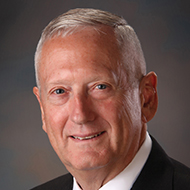
General Jim Mattis, US Marine Corps (Ret.), is the Davies Family Distinguished Fellow at the Hoover Institution and served as the nation’s 26th Secretary of Defense after his 2017 confirmation. Over a forty-three-year Marine Corps career, he commanded at every level, leading forces in Afghanistan and Iraq and later overseeing U.S. Central Command. He also served as NATO’s Supreme Allied Commander for Transformation. He is the author of the New York Times bestseller Call Sign Chaos.

Ryan Holiday is bestselling author and modern interpreter of Stoic philosophy. His books—including The Daily Stoic, The Obstacle Is the Way, Ego Is the Enemy, Stillness Is the Key, and his #1 New York Times series on the Stoic Virtues—have sold more than 10 million copies in over forty languages. He lives outside Austin, Texas, with his wife, two sons, and a small herd of farm animals, and owns The Painted Porch bookstore in Bastrop.